6/24/2013

'You Can't Eat Sharia' #EGYPT #Islamist #Ikhwan #salafi

Egypt is on the brink -- not of something better than the old Mubarak dictatorship, but of something even worse. 

BY MOHAMED ELBARADEI


Two years after the revolution that toppled a dictator, Egypt is already a failed state. According to the Failed States Index, in the year before the uprising we ranked No. 45. After Hosni Mubarak fell, we worsened to 31st. I haven't checked recently -- I don't want to get more depressed. But the evidence is all around us.


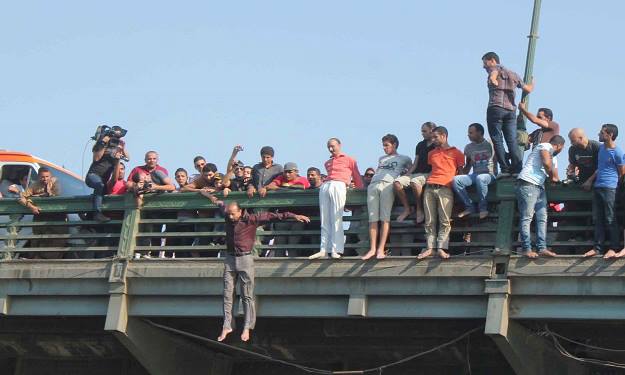
Today you see an erosion of state authority in Egypt. The state is supposed to provide security and justice; that's the most basic form of statehood. But law and order is disintegrating. In 2012, murders were up 130 percent, robberies 350 percent, and kidnappings 145 percent, according to the Interior Ministry. You see people being lynched in public, while others take pictures of the scene. Mind you, this is the 21st century -- not the French Revolution!
-->
The feeling right now is that there is no state authority to enforce law and order, and therefore everybody thinks that everything is permissible. And that, of course, creates a lot of fear and anxiety.
You can't expect Egypt to have a normal economic life under such circumstances. People are very worried. People who have money are not investing -- neither Egyptians nor foreigners. In a situation where law and order is spotty and you don't see institutions performing their duties, when you don't know what will happen tomorrow, obviously you hold back. As a result, Egypt's foreign reserves have been depleted, the budget deficit will be 12 percent this year, and the pound is being devalued. Roughly a quarter of our youth wake up in the morning and have no jobs to go to. In every area, the economic fundamentals are not there.
Egypt could risk a default on its foreign debt over the next few months, and the government is desperately trying to get a credit line from here and there -- but that's not how to get the economy back to work. You need foreign investment, you need sound economic policies, you need functioning institutions, and you need skilled labor.
So far, however, the Egyptian government has only offered a patchwork vision and ad hoc economic policies, with no steady hand at the helm of the state. The government adopted some austerity measures in December to satisfy certain IMF requirements, only to repeal them by morning. Meanwhile, prices are soaring and the situation is becoming untenable, particularly for the nearly half of Egyptians who live on less than $2 a day.
-->
The executive branch has no clue how to run Egypt. It's not a question of whether they are Muslim Brothers or liberals -- it's a question of people who have no vision or experience. They do not know how to diagnose the problem and then provide the solution. They are simply not qualified to govern.

#Egypt’s countdown to #June30 #Tamarod

What began as a humble attempt to translate countrywide discontent with the way President Mohamed Morsi has governed Egypt, the Tamarod -- or "Rebel" campaign -- has mobilized millions of Egyptians for a protest that promises to be epic on the anniversary of Morsi's inauguration. Although opposition forces initially kept the signature drive that demands Morsi's removal from office and early elections at arms length, nearly all of the relevant players in Egypt's transitional drama now recognize the campaign's significance and potential to affect change. Movement within the political opposition, including coordination meetings with the campaign and youth groups for a post-Morsi transition plan, suggests a fundamental belief that the June 30 protests could realize Tamarod's goal of replacing the president.

-->
Islamists who support Morsi's government, primarily from the Muslim Brotherhood, responded with a counter-signature drive of their own called Tagarrod -- or "Impartiality" -- to reiterate their faith (no pun intended) in the political system and the elections that brought him to power. Supportive Islamist groups have also called for a June 21 protest against violence. However, the counter-campaign's attempt to balance the scales only seems to accentuate the country's deeply divided polity. The Muslim Brotherhood and other pro-Morsi supporters have repeatedly vilified the Tamarod movement and some have gone as far as labeling those who turn out to protest on June 30 as traitors or unbelievers. Calmer heads within the Islamist movement have taken a more centrist position. The ultraconservative Salafi al-Nour Party has surprisingly demonstrated one of the most level headed attitudes with its promise to refrain from participating in protests, but urging the Muslim Brotherhood and the government to make concessions to opposition forces to diffuse the volatile situation. Abdel Moneim Aboul Fotouh's Strong Egypt Party fell on the side of peaceful protests but stood firm against calls for a military coup to replace Morsi.
The revolutionary fervor and scathing vitriol between the two groups has gone beyond talking heads exchanging barbs in the Egyptian media. A number of violent incidents, not the least of which involved an arson attack by unknown assailants on one of the Tamarod offices in Cairo on June 7, and hours of clashes between Muslim Brotherhood and Tamarod campaigners in Alexandria on June 12, have heightened tensions between opposing ideologies in the days leading up to the planned mass demonstration and worried government security forces. The clashes involving attacks on Tamarod have prompted Interior Minister Mohamed Ibrahim to publicize its security plans for June 30, but interestingly confusing messages have come out of the ministry. Initial statements indicated a police withdrawal from demonstration areas but Ibrahim subsequently announced his commitment to protecting all citizens on June 30. Outraged Islamists called for Ibrahim to be held accountable for his initial refusal to protect Muslim Brotherhood headquarters and private property.
Other rumblings within the Morsi administration also indicate some fear within the government that impending protests may shake the foundations of the current system. Morsi reached out to the National Salvation Front for yet another national dialogue in an effort to subdue the rising tide but without suitable guarantees that any negotiations would lead to binding decisions, opposition leaders declined. Instead, Morsi met with the Islamic Legitimate Body of Rights and Reformation, an independent multi-party coalition of Muslim scholars that includes Salafi and Muslim scholars whose deputy chief threatened the opposition with counter-rallies on June 30. Tamarod members have taken a similar hardline stance, demanding nothing short of the formation of a presidential council and a technocratic government with an eye toward Supreme Constitutional Court (SCC) President Manar al-Beheiry to replace Morsi.
-->
The scene is certainly set for what could possibly be a game-changing display of popular outrage. To hear either side of the political chasm talk of June 30, one might think an Egyptian Armageddon is right around the corner, with both sides bracing for an outbreak of violence. It is distinctly possible -- even probable -- that protests could come to blows. In past confrontations, it took little to provoke competing political forces into a street battle. Today, not only are the Ultras (the hardcore soccer fans who regularly clash with police) a factor, Black Bloc anarchists are also planning to join the protests adding to an already volatile mix, despite promises of nonviolent protests. "Popular committees" formed to prevent violence are just as likely to instigate as they are to prevent fights from breaking out. Even ordinary citizens, fed up with the dire economic conditions and a deteriorating quality of life, may have little patience for Islamists who may goad them into throwing the first punch. Some Egyptians who see no political or legal avenue through which to channel their disapproval have even admitted hopes of a confrontation to spark the army's intervention and another round of revolutionary change. In this highly charged political climate, all it takes is one angry reaction to ensnare an entire country.
Hopes of such clashes ousting Morsi, however, run into some heady challenges. The Tamarod campaign managed to surpass its goal of 15 million signatures calling for Morsi's resignation and snap elections. It rekindled the revolutionary flame sparked by its cross-party and youthful energy and captured the imagination of the silent majority in Egypt, but falls short of a legal avenue to realize a change in leadership. Currently, the constitution allows only a few ways by which to remove the president (articles 150 through 152): if the president falls ill or can no longer perform his duty; if he is charged with high treason and is subsequently impeached by at least two-thirds of the House of Representatives: if he puts his own presidency up to popular referendum: or if he voluntarily resigns. Anti-Islamist activists who argue that the constitution -- by virtue of the highly flawed process of its formation -- lacks the legitimacy to set appropriate standards for a post-revolution Egypt may be right, but neither opposition forces nor the judiciary have yet blatantly crossed the ambiguous legal boundaries that have guided (or misguided) it through its transition. The irony of Tamarod's support for the SCC's president to unconstitutionally lead the country is not lost on those paying attention. The judiciary, in particular, has remained conspicuously silent on the issue. However, judging by the SCC decision to allow the Shura Council to continue operating until a new parliament is elected, despite the court's ruling to invalidate the council, suggests its unwillingness to rock the boat.
With all of Egypt's dramatic twists and turns over the past two years, those who claim to know what will happen on June 30 will find themselves either wrong or lucky. The number of variables that factor into any one event outstrip the imagination every time. The truth is, no one can claim with any degree of certainty what might change after June 30, but Tamarod has certainly revealed how the deep polarization affecting Egyptian society at large might run deeper than previously imagined. It has tapped into a disaffected population that lost all faith in Morsi or that elections under his leadership could be free and fair. It has garnered the support of millions of Egyptians by avoiding the partisan politics that many citizens have come to abhor. Lastly, it has called on the aid of the army and the judiciary, the two institutions with the most support in Egypt, to lead the country to a new beginning. June 30 may amount to nothing more than a mass protest, but Morsi would be wise to take the advice of fellow Islamists, abandon the confrontational stance toward his detractors, and build the consensus that Egypt desperately lacks sooner rather than later. The countdown begins.
Tarek Radwan is the associate director for research at the Atlantic Council's Rafik Hariri Center. He previously reported on the Middle East with Human Rights Watch's MENA division and served as a Human Rights Officer for the United Nations/African Union Hybrid Operation in Darfur. Mr. Radwan specializes in Egypt, with a focus on civil society, human rights, the constitution, and judicial issue

6/21/2013

#Egypt tourism minister resigns over Luxor governor's terror links


Egypt's tourism minister has resigned in protest over the appointment as
Luxor governor of a member of a hardline Islamist group associated with terrorists who killed at least 58 tourists in 1997.

Hisham Zaazou, whose resignation has not yet been accepted by Egypt's prime minister, opposes the appointment on Sunday of Adel el-Khayat, a member of Gamaa Islamiya – a group whose associates carried out the massacre.
The appointment of Khayat, who denies personal involvement in the attack, has enraged not just Zaazou, but the tourism industry in Luxor, which fears the symbolism of the appointment will put off potential visitors.
The city is home to some of the country's most famous pharaonic ruins, and derives most of its income from tourism. But tourism has already fallen dramatically since Egypt's uprising in 2011, and locals fear any reminder of the 1997 attacks will further deter tourists.
One of 17 governors appointed this week, Khayat was not the only appointee to have been greeted with outrage. One new governor was allegedly forced to go to work disguised in a niqab while another was hit by a shoe as protesters in at least eight provinces demonstrated against President Mohamed Morsi's controversial inclusion of several Islamists among the new crop of state administrators.
Protesters are furious at Morsi's decision to increase the bureaucratic influence of the Muslim Brotherhood, whose allies now control 11 of Egypt's 27 states. This comes at a time when they feel he should be trying to reach out to non-Islamist sections of society.
Egypt is more polarised than at any point since 2011. Recent polls suggest Morsi's popularity has halved since his election a year ago, while opposition activists claim to have secured 15 million signatures on a petition calling on him to resign.
"Each day, more and more Egyptians are losing faith in the Brotherhood," said Doaa Khalifa, a leading opposition activist in Mansoura, a northern city where protesters padlocked state administrators inside their offices on Tuesday, and where one local official alleged the new Brotherhood governor had been forced to go to work hidden under a niqab.
"Before, they gave them the benefit of the doubt," added Khalifa, the local co-ordinator for the Tamarod campaign, the grassroots initiative that claims to have gathered 15 million signatures calling for Morsi to go. "Now, they think everyone who has a beard is a liar."
Fighting broke out between activists and Brotherhood members in Tanta, Egypt's fifth-largest city, where the new Brotherhood governor was attacked with a shoe. Protesters later set fire to the Brotherhood's local headquarters.
Fury at Morsi has far deeper roots, however, than just his recent appointments. Living conditions have significantly worsened in recent months, with food prices rising sharply, power cuts occurring on a daily basis, and fuel scarce. In Mansoura on Tuesday petrol station queues stretched for close to a mile.
"Morsi is ruining the country," said one driver, Yasser Abdel Samir. "Look at this petrol queue. That's because of him. There's no water; there's no electricity; salaries are low; food prices are high. He's going down on the 30th," added Abdel Samir, referring to planned protests against Morsi's regime on 30 June, the first anniversary of his election.
Egypt is holding its breath for the day, which many hope will lead to Morsi's exit; others, however, fear it will inevitably lead to violence, should Morsi's still-sizeable support base clash with his opponents.
Outwardly, Morsi's office says it is relaxed about the planned demonstrations. "Provided they do all this peacefully, that's a very healthy sign and a sign that the revolution has actually worked," Khaled al-Qazzaz, a presidential aide, said last week. "This is the best celebration for completing a year in office for our first democratically elected president."
But the day is being taken so seriously by those in power that the army has said it will be deployed on the day, and Morsi publicly met Egypt's most senior Muslim and Christian clerics on Tuesday in an apparent attempt to establish social unity.
He has also tried to shore up his standing among Salafists, an ultraconservative section of Egyptian society whose support for his regime may be wavering. Morsi's appointment of the new Luxor governor, his appearance at recent Islamist rallies, and his severance of diplomatic ties with Syria may all be aimed at impressing the Salafists, some of whom see the war against the Syrian regime as a holy one.

#Egypt Cuts Diplomatic Ties to #Syria #Morsi

The Egyptian government has announced it’s severing all ties to the Syrian government and backing the rebel fight seeking to oust Bashar al-Assad. On Saturday, Egyptian President Mohamed Morsi told supporters he’s closing the Syrian embassy in Cairo and recalling his government’s envoy from Damascus.

--> Egyptian President Mohamed Morsi: "The Syrian people are facing a campaign of extermination and planned ethnic cleansing, fed by regional and international states who do not care for the Syrian citizen. The people of Egypt support the struggle of the Syrian people, materially and morally. And Egypt — its nation, leadership and army — will not abandon the Syrian people until it achieves its rights and dignity."

In his comments, Morsi also
 called on the international community to enforce a no-fly zone over Syria and urged all Hezbollah members fighting alongside Assad’s forces to return to Lebanon. In response, the Syrian government said Morsi has joined the "conspiracy and incitement led by the United States and Israel against Syria." The U.S. has denied pressuring Egypt on Syria.

only in #egypt Egyptian Collective suicide

Egyptian Collective suicide


-->

6/18/2013

العاهل السعودي يقطع إجازته بالمغرب بسبب تطورات المنطقة #السعودية

العاهل السعودي يقطع إجازته بالمغرب بسبب تطورات المنطقة

لم أفهم ولم يفهم غيري من ملايين العرب ماذا يعني هذا الخبر الذي تصدر النشرات ألإخبارية الخليجية وألذي جاء على الصفحات ألأولى وتصدر عناوين الصحف والمجلات والقنوات الإخبارية وجاء على رأس عناوين ألأخبار في ألصفحة ألألكترونية لقناة ألعربية. فلماذا قطع إجازته وعاد من المغرب وما الدور الذي سيلعبه ألآن في المؤامرة التي أشعل فتيلها في سوريا؟ 
هل سيقود جحافل الجيوش ألإسلامية والتي سيتقدمها أمراء وأميرات آل سعود وبقية حكام ألخليج ألذين لم يخوضوا حربا طوال حياتهم. أم سيجلس في قصره مستمتعا بما لذ وطاب من ألأكل والشراب والحسان بينما الشعب السوري يذبح عن بكرة ابيه بتمويل من حكومته وتوجيه من اسرائيل وامريكا؟ هل يعرف أحد منكم ألجواب أفيدونا أفادكم ألله. ماذا سيفعل هذا الحاكم حيال الوضع في سوريا؟ هل سيسلح المعارضة والتي هي أصلا مسلحة ومدربة ومجهزة من أموال آل سعود ولم يبقى أي نوع من السلاح الا وأرسل الي عصابات ألتكفير وألتهجير والقتل والتدمير؟ لم يبق أسلوب خسيس الا واتبعه هو واسياده حتى بلغت ألأمور ما بلغته هناك من أوضاع مزرية يندى لها الجبين. فلقد لفقت قنواته الأخبار وفبركت القصص والحكايات عن جرائم وهمية ارتكبها النظام السوري مدعوما بجيشه البطل. وعرض تحريضي لجرائم نسبت الى الجيش السوري ليتضح لاحقا ان منفذيها لم يكونوا سوى افراد العصابات الوهابية والإجرامية والتكفيرية والتي ارسلت إلى سوريا للقضاء على آخر معاقل الرجولة والشهامة والبطولة خدمة لأعداء العرب والمسلمين
 إذن ما هو ألأمر ألخطير ألذي أستدعى أن يعود عبد الله من المغرب ويعود على عجالة؟ ربما يكون الوضع السوري أحد هذه الأسباب مع أنني أشك في هذا. وأغلب الظن ان هناك مؤامرة ضده تنظم داخل عائلة آل سعود للإنقلاب عليه وإستلام مقاليد الحكم. فقبل أن يذهب لقضاء إجازته كان الوضع في سوريا أكثر تأزما ومع ذلك لم يأبه هادم الحرمين بكل ذلك وشد الرحال الى المغرب ولا أدري لماذا المغرب مع أن أمراء وأميرات عائلته لا يحلو لهم الإستجمام والسياحة والتسوق إلاّ في بلاد العم سام والدول الغربية
 ألمهم أن ألرجل عاد على عجالة من أمره ليتابع مشهد آخر من مشاهد التدمير والذي أعد له جيدا على مدى سنوات ليبلغ هذا المنحنى من الحرب المدمرة. أمريكا لا تلعب ولا تمزح وهي مصممة على إكمال هذه المهزلة من المبررات الوهمية لتدخلها العسكري في سوريا. تماما كما فعلت في العراق وليبيا. ونحن كعرب نصفق ونهلل بل وحتى نطالب وبقوة ان تتدخل امريكا وبأسرع وقت ممكن لتقضي على آخر معاقل ألصمود في وجه ألغطرسة ألصهيونية وألإمبريالية. نطالبها أن تسلح ألمعارضة بأسلحة فتاكة ومدمرة ونسينا ان هذه الدولة هي نفسها التي ترفض حتى ان تبيع لنا أسلحة دفاعية لمواجهة إسرائيل. ما ألذي لم شمل ألشامي على المغربي كما يقول ألمثل؟ لماذا هذا الحرص من قبل ألإدارة ألأمريكية على المضي قدما وألإستمرار في تدمير سوريا
 إذا تدخلت أمريكا وعربان ألخليج في هذه الحرب فستفتح كل أبواب جهنم على المنطقة ولن تنعم المنطقة لا بالأمن ولا بالسلآم لمئات ألسنين ألقادمة. فاذا كانت حرب العراق والتي حظيت بتاييد غالبية دول ألعالم لا زالت لحد ألآن لم تهدأ ولن تهدأ، فكيف للحرب ألسورية والتي ينقسم ألعالم حول أهدافها ومبرراتها أن تنتهي حسب خيال هؤلاء المغامرين. نعود إلى أسد ألأسود عبد الله بن عبد ألعزيز آل سعود ونسأله ما ألذي انت فاعله يا بطل ألإسلام يا من تحرص دائما على منع سفك نقطة دمِ واحدة من أي مسلم مهما كان مذهبه وطائفته. وتحرص دائما على عدم إزهاق روح أي مسلم إلاّ من أمر ربي. تاريخكم يشهد لكم على عدلكم وديموقراطيتكم
 لإن العدل عندكم هو أساس ألملك. وكل مواطن أو مقيم على أرض الجزيرة العربية يتمتع بكامل حقوق المواطنة ويحظى برعاية طبية وإجتماعية لا مثيل لها. طبعا هذه الممارسات التي ذكرتها هي بالأحلام. فعبد الله لا يعرف بالظبط ما يدور من إجراءآت تعسفية على أرض مملكته لم يمر مثلها على مدى التاريخ. فالإنسان المقيم هناك لا يشعر بفرق بينه وبين البهائم. فهو محروم من كل شيء بما فيه حرية ألتعبير والإفصاح عن رأيه بصراحة وبدون خوف عن أي موقف سياسي لا يتماشى مع سياسة آل سعود. فجأة اصبحت السعودية واحة للديموقراطية واراد ملكها نقل النموذج ألسعودي ألتعسفي الى باقي الدول ألعربية بما في ذلك سوريا طبعا. يريد أن يوهمنا هذا الخرف بأن ما يفعله هو خدمة للشعب السوري كي يحرره من قبضة النظام العلوي والذي كفرّه هو وعلماؤه. إكتملت ألإستعدادات للمرحلة الثانية من ألحرب الممنهجة والمخطط لها جيدا من أمريكا وحلفائها. تدريبات ألأسد ألمتأهب في ألأردن والتي شاركت بها أكثر من تسعة عشرة دولة بما فيها دولة آل سعود طبعا. ونشر صواريخ الباتريوت في كل من تركيا وألأردن قد اكتمل
 وإسرائيل انهت أجراء مناوراتها الداخلية. ماذا بقي إذن؟ أن يعطي عبد الله شارة بدء ألحرب لتندلع على كل الجبهات ويكون له شرف المساهمة في تدمير بلد عربي آخر يضاف الى قائمة ألدول ألتي ساهمت بلاده في تدميرها. ألتردد الحاصل حاليا لبدء هذه الحرب له ما يبرره. فلا أحد يعرف إذا ما ابتدأت كيف ستنتهي. ولا أحد يعرف حجم ألخسائر ألبشرية وألمادية التي قد تتسبب بها هذه الحرب. ولا أحد يعرف الى أين ستمتد نيران هذه الحرب إن ابتدأت


 من ألمؤكد أن كل هذه الأفكار وغيرها تتبادر إلى أذهان مروجي هذه ألحرب باستثناء قادة دول الخليج والذين لا يعنيهم لا من قريب ولا من بعيد حجم ألخسائر ألتي ستتسبب بها هذه ألحرب. فهم يملكون المال والذي يوفر لهم الحماية ويمنع عنهم الشر والضرر. هم واهمون بأن المال سيمنحهم الحماية ويبعد عنهم الجماهير الغاضبة التي ضاقت ذرعا بممارساتهم التعسفية والإستبدادية والسلطوية. ألحرب ان اندلعت فستطول، ولن يكون هناك رابح أو خاسر. فمؤيدي النظام السوري لن يسمحوا بسقوطه بينما معارضيه لا يهمهم هذا الموضوع فهدفهم هو تدمير سوريا بمنجزاتها وحضارتها وقوتها خدمة للعدو ألإسرائيلي وألذي يريد جاراً له منزوع ألأظافر ومنزوع ألسلاح لا يسبب له الإزعاج ويحافظ على أمن كيانه من عبث ألعابثين وتهديداتهم، تماما كما تفعل بقية الدول العربية المحيطة بالكيان الإسرائيلي مثل ألأردن ومصر ولبنان ألرسمي
 لننتظر لنرَ ما ألذي دفع ألعاهل ألسعودي إلى قطع إجازته والعودة بسرعة الى بلاده. وإن غدا لناظره قريب. ويبدو اننا لن ننتظر طويلا فها هو عميلً آخر وضيع قد أنضم الى جوقة العملاء ضد العروبة والإسلام هو رئيس مصر المنتخب والذي أعلن الليلة الفائتة قطع علاقاته مع سوريا وقرر طرد السفير السوري من مصر مع أنه وعد هو وحزب الإخوان بطرد السفير ألإسرائيلي إذا إستلم ألحكم، ولكن يبدو أن ألأمور قد تداخلت على بعض ولم يعد يميز بين إسرائيل وسوريا. وطالب أيضا بتطبيق منطقة ألحظر ألجوي على شمال سوريا. فلماذا هذا التسارع الغريب لتصعيد التوتر في سوريا علما بانه كان هناك إستعدادات تجري لعقد مؤتمر جنيف 2 لحل المشكلة في سوريا بشكل سلمي. كل هذه الدول لا تريد حلاّ سلميا للمشكلة ألسورية، تريثد فقط شحن ألأجواء وصب المزيد من البنزين عل نارها لتزداد لهيبا وانتشارا.
-->