4/27/2013

#UNICEF 's Numbers Unemployment in #Egypt

UNICEF: 13% unemployment rate in Egypt and 90% of them are carrying certificates of medium and high

4/23/2013

Anonymous Calls for CISPA Internet Blackout April 22nd - April 19th, 2013

We are Anonymous
We are Legion
We do not forgive
We do not forget

Number one source for Anonymous/activistic news.

Anonymous operations will be posted here; along with videos related to Anonymous, protests, or any other forms of activistic activities.

Check back daily for updates.


Dear citizens of the internet,

We are Anonymous.

The United States Government is again attempting to control and censor the internet. The Cyber Intelligence Sharing and Protection Act has just recently passed the house.

This bill would allow major internet entities such as Facebook, Twitter, and Google to voluntarily share your personal information with the U.S. Government. This will not only effect users in the United States, but also anyone with an account with these companies.

This upcoming Monday, April the 22nd, we invite you to join Anonymous in a internet blackout. We encourage all web developers and website owners to go dark on this date. Display a message as to why you are going dark, and encourage others to do the same.

We hope, just like the successful protest over the Stop Online Piracy Act, we can encourage the senate to stop this bill.

Spread the message, and inform the world.

We are Anonymous
We are the people
We are the internet

Knowledge is free

4/22/2013

Arab Spring Time in Saudi Cyberspace


Not more than two years ago, the concept of reform in Saudi Arabia would have been as much an oxymoron as business ethics or airline cuisine. In recent months, however, the Arab Spring’s uncertain winds of change have finally begun to sweep into the world’s last forbidden kingdom. Finding themselves alone in a crowd (of revolution) in the Middle East, Saudi Arabia’s monarchs are quickly realizing that their secret police and petrodollars may be no match for their citizens’ technology-driven empowerment.
On March 1, Saudi security forces cracked down on a woman-led protest in the city of Buraidah, known as the nerve center of Saudi Arabia’s ultraconservative Wahabbist ideology. Over 160 people, mostly women and children, were arrested after erecting a tent camp to pressure the government to free their imprisoned husbands whom they claim have been detained for years without visitation or access to legal counsel. The Saudi government claims that the detainees are part of a “deviant group,” a term given to suspected Al Qaeda sympathizers or Islamist political opposition groups across the Gulf.
News of the arrests spread like wildfire. Protests in support of the Buraidah women were called for by activists from the Shiite minority in the Eastern Province and liberal reformists in Riyadh and Jidda. The mobilization of Saudi conservatives, liberals and minorities against the government’s repressive policies bore a dangerous resemblance to the red-green alliances that toppled governments from Cairo to Tunis. While turnout at the demonstrations was limited due to the government’s ban on political gatherings, the Saudi Twittersphere was teeming with anger.
Two weeks later, the government-sponsored Arab News daily published a cover story condemning what it deemed “abusive” actions by Saudi Twitter users. The story mentioned that the authorities were mulling over a plan to link Twitter accounts with their users’ identification numbers. Soon after, the story was pulled from the online version of the newspaper without explanation.
For one of the most Internet-privy societies on the planet, any move to link Twitter accounts with personal ID numbers would result in a mass exodus to other online forums that are not monitored. Saudi Arabia ranks number one in the world for Twitter users per-capita, with an estimated 51 percent of all Saudi Internet users maintaining an account with the social media network. Analysts suggest that any such move would result in a 60 percent reduction of Twitter usage in the country — a true window onto how many Saudis are voicing dissent against their government.
Still, on March 31, the Saudi Communications and Information Technology Commission instructed Skype, WhatsApp and Viber to comply with local regulations or risk being shut down. These applications are Internet-based communications services that are both free of charge and not subject to the kingdom’s telecommunications regulations.
The Saudi government has a strong interest in limiting social media and online communications services. Protests are being increasingly organized through use of the WhatsApp messaging application. Political dissidents are able to use Skype to communicate with human rights organizations and foreign media networks without fear of government monitoring. Some government employees and those with ties to the royal family have begun to exploit Twitter to disseminate information regarding corruption in the kingdom.
The Saudi government is, however, becoming increasingly hesitant about limiting social media and other communications because of the potential for a political backlash. Freedom of speech and communication were a hallmark demand of popular uprisings elsewhere in the Arab world, with attempts to cut online activity serving to fuel discontent rather than mitigate unrest. Saudi Arabia is already a favorite target for civil rights activists across the globe, and a ban on social media would only add to a long list of reasons for further divestment and isolation campaigns.
As an alternative, the Saudi government has begun encouraging loyalists to condemn and pursue those suspected of online dissent rather than close the outlets altogether. In recent weeks, a Shura Council member filed a lawsuit against a critical Twitter user, while the government-appointed imam of the Grand Mosque in Mecca dedicated his Friday sermon on April 5 to condemning the social network, calling it a “threat to national unity.”
As the government remains confounded by its inability to control online dissent, there is no doubt that the rising tide of anger across Saudi cyberspace has begun to spill over into physical reality. Unwillingly, the government has been forced to wrestle with undertaking previously unimaginable reforms with regard to women’s rights and employment opportunities for millions of young, educated citizens. With social media as their vehicle, Saudis are threatening to take control of their country’s destiny for the first time in history, and there may be nothing their government can do about it.

4/21/2013

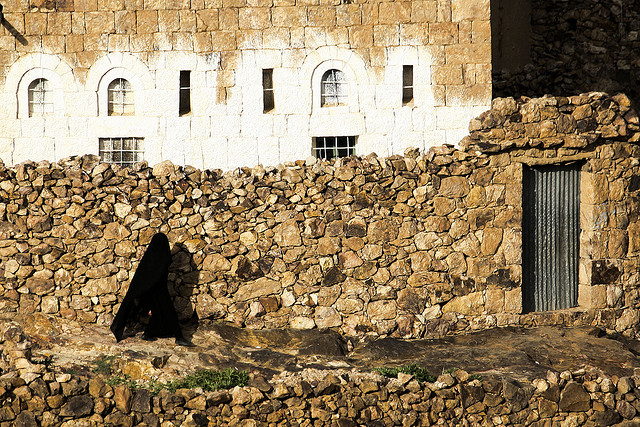
#yemen in photo`s


-->


-->


Bab al-Yaman. Sana’a. Yemen in Yemen

4/18/2013

Yemen’s Southern Intifada #yemen

In early February, a car made its way along the winding road from the southern Yemeni port city of Aden to Dhale, a dusty mountain town of traditional mud-brick houses. As the car sped toward its destination, the flags and checkpoints increased in regularity with every passing mile.
Yemen's flag is made up of three horizontal stripes of red, white, and black. Those flying from the rooftops along the roadside sported an additional blue triangle dotted with a single red star. The flags, a remnant of the south's independent past, are a symbol of defiance; the checkpoints, manned by soldiers from Yemen's north, a source of simmering tension.
"See," said Fatima, an Adeni college professor, as the car stopped at yet another checkpoint so that a uniformed youth, his cheek bulging with the narcotic qat leaf and an AK-47 casually slung across his shoulder, could take a look inside. "How can they say that this is not an occupation?" 
On the outskirts of Dhale, the military checkpoints came to a sudden halt. The government had no jurisdiction beyond the town's borders. At the top of a hill in the center of Dhale, Shalal Ali Shaye'a, a top leader in Dhale of Hirak, squinted into the sun. "Look," he said, pointing to another blue-triangled flag painted onto the mountainside opposite him. "This is the free south."
----
Shaye'a is a leading member of one of the more radical factions of Hirak al-Janoubi ("the southern movement," better known in Yemen as Hirak), a loose coalition of southern rights groups formed in Yemen in 2007. Since a popular uprising unseated former President Ali Abdullah Saleh -- a hated figure for many southerners -- in 2011, secessionist sentiment has been on the rise in the south and the pro-independence wing of Hirak has been gaining confidence. While politicians and diplomats in the northern capital of Sanaa have been focused on the peace plan that led to Saleh's ouster, Shaye'a and his cohort have been planning their "peaceful intifada" which they hope will end with talks in Geneva, an end to the checkpoints, and the arrival of U.N. peacekeepers.
But if recent events are anything to go by, southerners' attempts to extricate themselves from their two decade-old union with the north could prove to be a messy affair. Tensions between Hirak and the government had been rising for months when, on February 20, security forces raided the Aden home of Qasem Asker Jubran, Yemen's onetime ambassador to Mauritania, now a committed secessionist. Juran was arrested, accused of planning to disrupt "by any means possible" a rally planned for the next day by Islah (Yemen's biggest Islamist party) to celebrate the first anniversary of the man who replaced Saleh as president, Abed Rabbo Mansour Hadi. Over the next week, Hiraki protesters clashed again and again with security forces. By the end of February, members of the southern movement estimated that up to 20 of their number had died in the violence, while the Islah's party headquarters in the southern city of Mukalla had been set on fire in just one of a series of attacks on northern political parties and businesses.
----
Dhale and nearby Radfan hold an important place in Hiraki and southern mythology. It was in Habilayn, a village in Radfan, that British troops shot and killed seven men in October 1963, sparking the uprising that ended British rule in the south. The revolt was launched from the craggy, volcanic mountains of Dhale, and the People's Democratic Republic of Yemen (PDRY), the socialist state that succeeded the British, populated its military with men from the area.
In 1990, bankrupted by the fall of the Soviet Union and a bloody 1986 civil war, the PDRY merged with its northern neighbor, the Yemen Arab Republic (YAR), led by Saleh. But four years later Ali Salem al-Beidh, the PDRY leader who took the south into the unity deal, declared the foundation of a new state, the Democratic Republic of Yemen. Southerners had complained of an unequal partnership and of a campaign of assassinations targeting their leaders since the north-south merger. Fed up after a series of inconsequential talks, they had decided to quit the union. 
The militaries of the PDRY and YAR, which were not integrated after unity, went to war. Dhale was a key battleground during the fighting, which the northerners won, backed by tribal militias, mujahedeen recently returned from Afghanistan, and even former PDRY soldiers who defected after a bloody civil war in the south in 1986.
Many southern officers and civil servants, including Shaye'a, were forced into early retirement after the war, and most accounts of the life in the south after1994 run down similar lines: of northern tribal, military, and economic interests taking over vast swathes of land and businesses; of soaring unemployment among southerners while northerners arrived to take juicy government jobs; and of brutal repression of any kind of secessionist sentiment or expression of southern identity.
"Before unity," Shaye'a said, "I was a student at military college. I graduated in 1990, into unity. I practiced for a few years and then the war started. They kicked all our soldiers out, and I fled. I came back six months later. After they kicked us out, we lived in a miserable situation."
In 2006, former military officers from the region began to organize protests at home and in Aden over low pensions and lack of jobs. A year later, Hirak was formed as an umbrella organization to bring together the plethora of southern rights movements that had sprung up since 1994. Today, it is made up of around seven major groups and many more splinter organizations, loosely formed around the Supreme Council of the Southern Movement, led by Hassan Baoum, a popular pro-independence activist.          
---- 
Hirakis are not just disappointed former government workers. Many of the group's most vocal supporters are so young that they cannot remember life before unity. At one of the weekly marches the group holds in Crater, a volcanic outcrop of the Shamsan mountain which towers over Aden, Nour, 20, tried to explain her involvement in the movement.  
"I was born inside unity; I don't like it. I want separation," she said. "It is unfair. I don't like the poverty. I want to get back the country. We need to support the demonstrations."
Unemployment is a big issue for young southerners like Nour. Even those who do not actively support Hirak believe that the best state jobs go to the friends and families of Sanaa's political elite. This is frustrating and baffling to those who believe that most of the country's resources are located in the south -- two of Yemen's biggest oil fields are to be found in the former PDRY, while Aden was once one of the busiest ports in the world. 
Other Hirakis have only recently come around to the secessionists' way of thinking. "I am from those who wanted to correct the road of the unity," said Nasser Mohamed Al-Khubaji, one of Hirak's top leaders in Lahj, as he reclined in the cushioned mafraj of his simple home in Radfan in mid-February. "I thought we could do something through parliament. But when we took up the case of the south, we faced aggression. People became angry with us."
Al-Khubaji quit parliament after the 2007 shooting of southerners preparing for a rally to celebrate the anniversary of the revolt against the British by the central security forces. As a member of parliament for Lahj governorate, he had taken part in the preparations. "When we were preparing for our revolutionary activities, the military from the north came. They killed four and injured 20," he said. The opportunity for negotiation with the north died then, he said: "The time was over for talk."
----
If Nour had been born to the north, she would probably have taken part in the protest movement that unseated Ali Abdullah Saleh in 2011, voicing frustrations about Yemen's northern elite similar to those heard across the south. But like many Hirakis, after initially supporting the revolution she came to see it as a largely northern affair.
Yemen's 2011 uprising started as a nonviolent movement in the big northern cities of Taiz and Sanaa. But it soon descended into a violent elite power struggle, fought between military units loyal to Saleh and his son Ahmed Ali; those with ties to the powerful general and former Saleh ally Ali Mohsen al-Ahmar, and militias loyal to the tribal leaders and brothers Hamid and Sadeq al-Ahmar.
The deal brokered by members of the Gulf Cooperation Council (GCC) to end the fighting in November 2011 was an elite peace accord, Nour said, not a solution to southerners' problems -- the GCC deal explicitly references the problems in the south, but does not go far enough toward addressing southern grievances for many Hirakis. "I don't care about 2011; that was just a fight between Ali Abdullah Saleh and Hamid al-Ahmar," she said. "It has nothing to do with the south."
----
Yet if foreign diplomats involved in brokering the accord are to be believed, the GCC deal presents a unique opportunity for southerners, in the form of a much-vaunted national dialogue conference. The deal's brokers have effectively staked Yemen's future on the dialogue's success and President Hadi has said that the country could descend into civil war if it fails.
During six months of talks, which are due to start on March 18, the conference's organizers hope that working groups will be able to draft a new constitution and discuss solutions to the country's many problems, including the "southern question" as it is often described in Sanaa. Delegations from Yemen's many fissiparous factions have been invited to the conference and Hirak has been offered the second-biggest allotment of seats, 85 in total. Yet for many Hirakis, the conference is a non-starter.
Despite diplomats' best efforts to convince them that attending the talks is in their best interests, a number of Hiraki groups have said that they will not go to the dialogue. Most vocal in rejecting the talks have been factions linked to Baoum and al-Beidh, one of the main architects of unity in 1990 and, since 1994, one of its biggest critics. They want bilateral negotiations between the north and the south over separation, not to discuss the shape of the unified state.
----
Other southern movement leaders are more open to the idea of the talks. In March 2012 Mohamed Ali Ahmed, the former governor of Abyan governorate, returned to Aden after nearly two decades in exile in Britain. Diplomats overseeing the GCC deal, who describe him as a moderate, say that he has become a key point of contact in Hirak. Speaking at his home in Aden in February, he told Foreign Policy that he would go to the dialogue even though Hadi is yet to meet a series of demands that he helped southerners to formulate in 2012 as a precondition to taking part in the conference.
"We will go so that the international community does not say that southerners do not cooperate," he said. "We cannot ignore the international community. We will [get our demands] from the inside. We cannot ignore the will of the people, but we want to use peaceful means."
Ali Ahmed believes the creation of a two-state federal union between the north and south followed by a referendum after five years could be the best path to independence, an idea first floated by Hirakis in 2009. But the al-Beidh factions of Hirak, many who mutter that Ali Ahmed is working for Hadi to maintain rather than end unity, has become increasingly hard line.
----
The differences between al-Beidh and Ali Ahmed run deep -- much deeper than mere strategy. On January 13, 1986, the bodyguards of then-President Ali Nasser Mohammed opened fire on a meeting of the PDRY's politburo. Former associates say that he hoped to consolidate his power by assassinating the leaders of a faction loyal to his predecessor, Abdul Fattah Ismail, who was killed soon after the fighting started. But Ismail loyalists led by al-Beidh gained the upper hand in the ensuing civil war and after a month of fighting Mohammed fled to the north along with tens of thousands of his followers. Among those who fled north with him were Ali Ahmed and Hadi -- Yemen's current president.
Hirak's leadership has worked in recent years to reconcile the differences between the Toghma -- the winners of the 1986 war -- and the Zomra -- Nasser Mohammed's "desperate band" of followers -- hoping that the common goal of independence will be enough to patch over past rivalries and resentments. Since 2009, Hirak has held reconciliation marches every January 13 to mark the anniversary of the civil war. The 2013 rally was the biggest ever, according to the local Yemen Post. A number of Hirakis, who see the march as a watershed moment for the independence movement, claim that one million people attended (more reliable estimates run to the tens of thousands). But many Toghma still view their Zomra counterparts with suspicion. Some of the bloodiest fighting during the 1986 war occurred between militias loyal to Ali Ahmed and Baoum in Abyan; Shaye'a still recalls how his father, ministry of interior at the time, was killed by Nasser Mohammed's men at the January 1986 politburo meeting.
Hirak is unified in its quest for independence, said Jubran, who is widely seen as al-Beidh's man in Aden (the former president lives in exile in Beirut) during an interview at his home in the southern capital a week before he was arrested. "There are a lot of disputes between the different parties of Hirak," he said. "But the main goal is freedom. We are unified. In some other parties they want five years and a referendum but they will not prevail. When we got independence in 1967 no one told us to make freedom or a referendum and we don't need a referendum now."
"Ninety-nine percent" of southerners are behind the al-Beidh faction of Hirak, Jubran argued. While this figure is likely some way off -- and a of number Hirakis say that they support the equally pro-independence Baoum, who is based in Yemen, rather than Beirut-bound al-Beidh -- it is fair to say that a growing number of southerners are falling in behind the two men's uncompromising approach. And at rallies across the country, it is al-Beidh's image that is most visible on placards and banners. In Dhale and Lahj it is not uncommon to hear him described as "the president," a title he still bestows upon himself. Analysts estimate that support for the al-Beidh and Ahmed factions is split about 70 to 30 among Hirakis.
---- 
Some southerners had hoped that the northern revolution would lead to improvements in life in the former PDRY, and worried that independence would require a long, potentially bloody, and hugely costly struggle. Others thought that having Hadi, a southerner, as president might see Hirak treated with more leniency and were encouraged when the huge reconciliation march in January was allowed to pass unmolested. But the violence in February proved a tipping point for even more moderate southerners.
"I don't support Hirak, I am not a Hiraki," said Anas, a young southern woman who lives in Aden, in March. "But I no longer support unity either."
Perhaps sensing the direction in which popular opinion is going, southern movement leaders who had previously expressed willingness to compromise have also been taking a more combative stance of late. In February, Haydar al-Attas, prime minister of Yemen's first unity government, said that he would reject an invitation to the dialogue and demanded that Jamal Benomar, the U.N. envoy to Yemen, oversee a referendum on independence.
"In the end, they will all come around to our way of thinking or they will not matter," said one al-Beidh aligned Hiraki leader in response to the news. Ali Ahmed, who is not as widely popular as Baoum and al-Beidh, could lose the chance of a future role in the south if he attends the talks, he added.
Many southerners are skeptical of the international community's intentions meanwhile. At the Crater march, Mohamed, a pro-independence activist, could barely contain himself. "Where is the international community in all of this?" he asked, an often-repeated refrain at the march. "Where are our rights? In the north, they fought for one year, people were killed, and the international community gave them their peace. The northerners have dominated us, killed us, stolen from us since unity. Where is our dialogue with the north? We have been fighting for 20 years, but still they ignore us."
----
Thus far, the southern movement has been largely peaceful -- surprisingly so, given the availability of arms in Yemen and the number of disaffected, unemployed young men in the south. The leaders of even its more radical factions say that they are committed to peaceful protest, and while violence flared up in February, it did not boil over into the kind of devastating armed conflict seen in the north during 2011.
But a number of questions about Hirak's more extreme wing remain to be answered, not least its commitment to a nonviolent struggle. While Hiraki activists at marches like those in Crater are unarmed, and it is easy to believe people like Nour when she expresses her commitment to a peaceful uprising, al-Beidh's arm of Hirak has been accused on a number of occasions of building its own militia, and has recently been linked with arms shipments from Iran. Clashes have broken out between Hirak-aligned armed groups and government troops in recent years, many of them in Dhale and Lahj, a stronghold for the al-Beidh faction.
It is particularly hard to reconcile Shaye'a with the idea of Hirak's peaceful intifada. A number of Yemeni analysts say that he is one of the leaders of "The Movement for Self Determination," or Hatam, a militia formed after the civil war which has fought with the Yemeni military on a number of occasions in the past. In October 2010, a bomb placed outside of Al-Wahda Sports Club in Aden killed four people. The attack was blamed on Hatam, which planned to disrupt an upcoming football tournament, and Hirak. The government named Shaye'a as the ringleader of the group that planned the blast -- a charge he denies. "They are willing to say anything about the southern people," he said. "It is far from my peaceful revolution. I love sports." 
Shaye'a remained tightlipped as to whether Hirak has armed militias in and around Dhale, but when he left his home, he clambered into a battered Toyota pickup, armed gunmen -- one man wielding a rocket-propelled grenade launcher -- bouncing in the back as the truck wound its way along the dirt road. Earlier, he had explained why he lived in Dhale rather than Aden.
"We started here, in Dhale and in Radfan, because we were safe here," Shaye'a said. "Here, all the people are active with Hirak. Most of our army who were kicked out of their jobs came from here. Most of the military forces who were retired came from here. Here, the community helped us to start out activities. They were ready. The occupation forces were here -- there was action and there was reaction."
Al-Khubaji, Hirak's man in Lahj, agreed that his area was under Hiraki control but disagreed that the movement's success in the area had been achieved through force. Hirak has spent much of the past six years building a parallel state structure, providing public goods to residents of the area, he said. "Most of our work is in enhancing administrative and regulatory capacities," he said. "Politically the governorate is under the rule of Hirak. But we are under occupation. Before us, the courts were full of cases. Now, we have the councils of Hirak to solve problems. We even solve security problems. I would say that 90 percent of Lahj is under Hirak control. The occupation forces are still here; here, but not in control."
But few moments later, he added a familiar caveat. "Our movement is to get separation peacefully," he said. "But I cannot guarantee that other interests and movements will not take action. We insist on a peaceful movement. But we will not discourage anyone who wants to take this path." 
---- 
It might not be long before it becomes apparent how, exactly, Shaye'a, Jubran, and others plan to move forward. Jubran -- who was freed in late February having declared his commitment to peaceful protest -- ended his interview with the promise that by the 20th anniversary of the south's last attempt at separation, it would be an independent state once again. "On 21 May 2013, you will see," he said. "The peaceful intifada will begin." 
Within a year, he said, it would all be over.

4/16/2013

Did We Get the #Muslim_Brotherhood Wrong?


Nope. But it's time to revise our assessments. 


 The deterioration of Egyptian politics has spurred an intense, often vitriolic polarization between Islamists and their rivals that has increasingly spilled over into analytical disputes. Some principled liberalswho once supported the Muslim Brotherhood against the Mubarak regime's repression have recanted. Longtime critics of the Islamists view themselves as vindicated and demand that Americans, including me, apologize for getting the Brotherhood wrong. As one prominent Egyptian blogger recently put it, "are you ready to apologize for at least 5 years of promoting the MB as fluffy Democrats to everyone? ARE YOU?"


So, should we apologize? Did we get the Brotherhood wrong? Not really. The academic consensus about the Brotherhood got most of the big things right about that organization ... at least as it existed prior to the 2011 Egyptian revolution. U.S. analysists and academics correctly identified the major strands in its ideological development and internal factional struggles, its electoral prowess, its conflicts with al Qaeda and hard-line Salafis, and the tension between its democratic ambitions and its illiberal aspirations. And liberals who defended the Brotherhood against the Mubarak regime's torture and repression were unquestionably right to do so -- indeed, I would regard defending the human rights and political participation of a group with which one disagrees as a litmus test for liberalism.
But getting the pre-2011 period right doesn't let us off the hook for what has come since. How one felt about questions of the Brotherhood's ability to be democratic in the past has nothing to do with the urgency of holding it to those commitments today. Giving the group the chance to participate fully in the democratic process does not mean giving it a pass on bad behavior once it is in power -- or letting it off the hook for abuses of pluralism, tolerance, or universal values.  That's why I would like to see Egypt's electoral process continue, and for the Brotherhood to be punished at the ballot box for their manifest failures.
So what did we say about the Brotherhood, and what did they get wrong or right? I wouldn't presume to speak for a diverse academic community that disagrees about many important things, but some broad themes do emerge from a decade of literature. For one, most academics viewed the Brotherhood of the 2000s as a democratic actor but not a liberal one. That's an important distinction. By the late 2000s, the Brotherhood had a nearly two-decade track record of participation in national, professional, and student elections. It had developed an elaborate ideological justification for not just the acceptability but the necessity of democratic procedure. When it lost elections, such as in the professional associations, it peacefully surrendered power (and, ironically given current debates, it was willing to boycott when it saw the rules stacked against it). By 2007, it seemed to me that there was nothing more the Brotherhood could have done to demonstrate its commitment to democratic procedures in the absence of the actual opportunity to win elections and govern. I think that was right.
And of course it had developed a well-honed electoral machine ready for use whenever the opportunity presented itself.  Nobody in the academic community doubted that the Brotherhood would do well in the first wave of elections. Academics also pegged public support for the Brotherhood at about 20 percent, not far off the 25 percent Mohammed Morsy managed in the first round of the presidential election. They correctly identified the organizational advantages the Brotherhood would have in early elections, which would allow them to significantly overperform that baseline of support against new, less-organized opponents.
The Brotherhood's commitment to democratic procedures never really translated into a commitment to democratic or liberal norms, however. It always struggled with the obvious tension between its commitment to sharia (Islamic law) and its participation in democratic elections. Not being able to win allowed the Brothers to avoid confronting this yawning gap, even if they frequently found themselves enmeshed in public controversies over their true intentions -- for instance, with the release of a draft political party platform in 2007 that hinted at the creation of a state committee to review legislation for compliance with sharia and a rejection of a female or non-Muslim president.  As for liberalism, nobody ever doubted the obvious point that this was an Islamist movement with deeply socially conservative values and priorities. The real question was over their willingness to tolerate different points of view -- and there, deep skepticism remained the rule across the academic community.

How the #Muslim_Brotherhood Hijacked #Syria Revolution


No one in Syria expected the anti-regime uprising to last this long or be this deadly, but after around 70,000 dead, 1 million refugees, and two years of unrest, there is still no end in sight. While President Bashar al-Assad's brutal response is mostly to blame, the opposition's chronic failure to form a viable front against the regime has also allowed the conflict to drag on. And there's one anti-Assad group that is largely responsible for this dismal state of affairs: Syria's Muslim Brotherhood.


Throughout the Syrian uprising, I have had discussions with opposition figures, activists, and foreign diplomats about how the Brotherhood has built influence within the emerging opposition forces. It has been a dizzying rise for the Islamist movement. It was massacred out of existence in the 1980s after the Baathist regime put down a Brotherhood-led uprising in Hama. Since then, membership in the Brotherhood has been an offense punishable by death in Syria, and the group saw its presence on the ground wither to almost nothing. But since the uprising erupted on March 15, 2011, the Brotherhood has moved adroitly to seize the reins of power of the opposition's political and military factions.
According to a figure present at the first conference to organize Syria's political opposition, held in Antalya, Turkey, in May 2011, the Brotherhood was initially hesitant to join an anti-Assad political body. The group had officially suspended its opposition to the Baathist regime in the wake of the Israeli onslaught on Gaza in 2009, and it pulled out of an alliance with Abdul Halim Khaddam, a former Syrian vice president who defected in 2005.
The Brotherhood nonetheless sent members to participate in the conference, including Molhem Droubi, who became a member of the conference's executive bureau. Meanwhile, it took steps to form fighting groups inside Syria, recruiting potential fighters and calling on its relatively meager contacts on the ground in Homs, Hama, Idlib, and Aleppo.
As the idea of a unified opposition group to lead the popular revolt gained momentum, the Brotherhood became more involved. A month after the meeting in Antalya, it organized a conference in Brussels, attended by 200 people, mostly Islamists -- one of the first obvious fractures in the unity of the opposition. The Brotherhood subsequently organized several conferences that formed opposition groups to serve as fronts for the movement, allowing it to beef up its presence in political bodies.
After the conference in Brussels, at least three groups were formed "to support the Syrian revolution." The organizations continued to hatch, and a few months after the first conference they were present in opposition bodies that later formed the core of the Syrian National Council (SNC), an umbrella group that ostensibly represented all anti-Assad forces. The council set aside seats for both the Brotherhood and members of the Damascus Declaration, a group of Syrian reformists established in 2005 -- but the Brotherhood already had a significant presence within the Damascus Declaration group.

4/14/2013

الإيحاءات الجنسية لنظام #الأخوان

الإيحاءات الجنسية لنظام الأخوان 


PSY Says He Hopes NKoreans Enjoy His New Single

South Korean rapper PSY said on Saturday that he hopes North Koreans will enjoy his new single, even as tensions remain high on the Korean Peninsula.

The follow-up to his international mega-hit, Gangnam Style, was released in the UK yesterday (Friday, April 12). Gangnam Style, which has sold over a million copies in the UK, topped the singles charts in 27 countries, including the our very own Official Singles Chart. The accompanying video has been viewed over 1.5 billion times on YouTube.
You can watch Psy’s new video for Gentleman – complete with new dance routine! – below:


4/13/2013

سقوط الدولة المصرية: غياب قواعد اللعبة السياسية

من ساعة 25 يناير 2011 لم أرى أي فصيل سياسي في مصر يتحدث عن وضع قواد أساسية و واضحة و بسيطة تكون أساس إعادة بناء النظام السياسي في مصر.
 
القواعد دي غير تقديمها، كان لازم يبقى عليها إجماع... تكون مجموعة مبادئ لا يتنازع عليها أي فصيل سياسي: ليبرالي، إسلامي/ديني، يساري، إلخ
من الأمثلة في التاريخ هو إعلان الإستقلال الأمريكي. كان إعلان إستقلال لكنه كان إعلان مبادئ. الإعلان كان لا يزيد على صفحة وحدة.
الوقت بين إعلان الإستقلال لحد وضع الدستور الأمريكي كان 11 سنة!في هذه الأثناء كان إعلان الإستقلال ومبادئه هم قواعد اللعبة السياسية في امريكا.
الليبرالية لايمكنها تقديم أي حلول لولم يكن هناك قواعد واضحة حتى وإن كانت أقل من المستوى لئن اللمنهج الليبرالي يعتمد على البناء و التصحيح.


لكن مصر في السنتين إلي فاتوا و بالذات الفترة الأخيرة تفتقد لأي معالم واضحة و مطبقة تعطي ضمانات و تطمينات لكل الأطراف السياسية.
 
 
و الأسباب معروفة... فالإخوان تغطرسوا و ابعدوا الأخر و شكلوا قواعد اللعبة و غيروها على أهوائهم كما تطورت الأحداث.
 
هم كدة فاكرين انهم على طريق النجاح... لكن اللي مش فهمينه إنه لا يمكنهم تحقيق حتى اهدافهم الضيقة من غير قواعد واضحة مطبقة بحياد على الجميع.
 
و عشان كدة اسلوبهم و منهجهم لن يخلق إلا نظام مهلهل ساقط كالوضع في باكستان.
 
ما يحدث في مصر هو انها ما بقتش دولة قانون... لكنها دولة ساقطة... Failed State... أو على طريقها لذلك.
 

تعرف على الليبرالية في ٣ دقائق: جشع التجار و غلو الأسعار

معنى حرية التبادل و إن أي التبادل طالما حر لازم يكون إيجابي المجموع و ليس صفر المجموع (أي إن كلا من المتبادلين يحسنوا من وضعهم وليس واحد فقط على حساب الأخر). حلقة إليوم بوضح فيها الأسباب العديدة غير جشع التجار و المنتجين اللي تؤدي إلى غلو الأسعار. الإعتقاد إن الجشع هو السبب الأوحد أو الأساسي لغلو الأسعار فكرة مغلوطة بل هي خطر عل الإقتصاد


الحشيش بكام

موقع مخصص لتقديم أحدث أسعار الحشيش وأماكن البيع يوميا».. هكذا يعرف القائمون

 على الموقع الإلكتروني،


«الحشيش بكام؟» موقعهم، حيث إن الهدف من إنشاء الموقع أن يقدم متابعة لأسعار

الحشيش من خلال التواصل عبر موقعي

«فيس بوك» و«تويتر»،

 حيث وصل عدد المعجبين بصفحته على «فيس بوك» إلى 1364 شخصا،

 ومتابعوه على «تويتر»

وصلوا إلى 401 متابع
الغريب ان وزارو الاتصالات الى كانت عايز تحجب المواقع الجنسية سايبة الموقع دة وغيرة من المواقع المشبوة والى من السهل تتباعة ومعرفة المسئول عن الموقع و القبض علية, ولحد علمى ان الحشيش غير قانوانى فى مصر يعنى احنا مش فى هولاند لسة 

4/12/2013

Sleeping with the Enemy

What happened between the Neanderthals and us?


The Max Planck Institute for Evolutionary Anthropology, in Leipzig, is a large, mostly glass building shaped a bit like a banana. The institute sits at the southern edge of the city, in a neighborhood that still very much bears the stamp of its East German past. If you walk down the street in one direction, you come to a block of Soviet-style apartment buildings; in the other, to a huge hall with a golden steeple, which used to be known as the Soviet Pavilion. (The pavilion is now empty.) In the lobby of the institute there’s a cafeteria and an exhibit on great apes. A TV in the cafeteria plays a live feed of the orangutans at the Leipzig Zoo.
Svante Pääbo heads the institute’s department of evolutionary genetics. He is tall and lanky, with a long face, a narrow chin, and bushy eyebrows, which he often raises to emphasize some sort of irony. Pääbo’s office is dominated by a life-size model of a Neanderthal skeleton, propped up so that its feet dangle over the floor, and by a larger-than-life-size portrait that his graduate students presented to him on his fiftieth birthday. Each of the students painted a piece of the portrait, the over-all effect of which is a surprisingly good likeness of Pääbo, but in mismatched colors that make it look as if he had a skin disease.
At any given moment, Pääbo has at least half a dozen research efforts in progress. When I visited him in May, he had one team analyzing DNA that had been obtained from a forty- or fifty-thousand-year-old finger bone found in Siberia, and another trying to extract DNA from a cache of equally ancient bones from China. A third team was slicing open the brains of mice that had been genetically engineered to produce a human protein.
In Pääbo’s mind, at least, these research efforts all hang together. They are attempts to solve a single problem in evolutionary genetics, which might, rather dizzyingly, be posed as: What made us the sort of animal that could create a transgenic mouse?
The question of what defines the human has, of course, been kicking around since Socrates, and probably a lot longer. If it has yet to be satisfactorily resolved, then this, Pääbo suspects, is because it has never been properly framed. “The challenge is to address the questions that are answerable,” he told me.
Pääbo’s most ambitious project to date, which he has assembled an international consortium to assist him with, is an attempt to sequence the entire genome of the Neanderthal. The project is about halfway complete and has already yielded some unsettling results, including the news, announced by Pääbo last year, that modern humans, before doing in the Neanderthals, must have interbred with them.
Once the Neanderthal genome is complete, scientists will be able to lay it gene by gene—indeed, base by base—against the human, and see where they diverge. At that point, Pääbo believes, an answer to the age-old question will finally be at hand. Neanderthals were very closely related to modern humans—so closely that we shared our prehistoric beds with them—and yet clearly they were not humans. Somewhere among the genetic disparities must lie the mutation or, more probably, mutations that define us. Pääbo already has a team scanning the two genomes, drawing up lists of likely candidates.
“I want to know what changed in fully modern humans, compared with Neanderthals, that made a difference,” he said. “What made it possible for us to build up these enormous societies, and spread around the globe, and develop the technology that I think no one can doubt is unique to humans. There has to be a genetic basis for that, and it is hiding somewhere in these lists.”
Pääbo, who is now fifty-six, grew up in Stockholm. His mother, a chemist, was an Estonian refugee. For a time, she worked in the laboratory of a biochemist named Sune Bergström, who later won a Nobel Prize. Pääbo was the product of a lab affair between the two, and, although he knew who his father was, he wasn’t supposed to discuss it. Bergström had a wife and another son; Pääbo’s mother, meanwhile, never married. Every Saturday, Bergström would visit Pääbo and take him for a walk in the woods, or somewhere else where he didn’t think he’d be recognized.
“Officially, at home, he worked on Saturday,” Pääbo told me. “It was really crazy. His wife knew. But they never talked about it. She never tried to call him at work on Saturdays.” As a child, Pääbo wasn’t particularly bothered by the whole arrangement; later, he occasionally threatened to knock on Bergström’s door. “I would say, ‘You have to tell your son—your other son—because he will find out sometime,’ ” he recalled. Bergström would promise to do this, but never followed through. (As a result, Bergström’s other son did not learn that Pääbo existed until shortly before Bergström’s death, in 2004.)
From an early age, Pääbo was interested in old things. He discovered that around fallen trees it was sometimes possible to find bits of pottery made by prehistoric Swedes, and he filled his room with potsherds. When he was a teen-ager, his mother took him to visit the Pyramids, and he was entranced. He enrolled at Uppsala University, planning to become an Egyptologist.

Lessons from #Syria


There are two parts to this brilliant article by Beesaan el Shaikh in Al Hayat (Arabic) which I believe is an imperative read for anyone interested in the Arab uprising.
The first part of the article uses the tragedies generated by the revolution as a very compelling argument NOT to support it. The second part, near the end, turns the argument around making a simple but slam-dunk case for the revolution.
I want to use the first part to rephrase a position I expressed in the very beginning of this revolution, days before the first Assad speech and the subsequent violent turn of the uprising: I expressed then my hope that Assad would do the wise thing and grab the opportunity to reform the regime by himself, because that was the only transition that would avoid destroying Syria, or handing it to Islamic extremists.
I was naïve in my hopes, obviously. But I believe that hope is a moral imperative. I knew then, like all those who lived through Lebanon's civil war, that no matter where it happens on this earth, or why, or how legitimate, when an uprising turns into an armed rebellion, there is absolutely no controlling of the damage it can make to the structure of society and its ability to recuperate post conflict (think Iraq, Lebanon, but also Salvador, Tchetchnia, or Sri Lanka more globally).
The unspeakable price of civil violence in terms of social dismantling (even more so than the toll on human life and heritage), is why I still believe that any people who has regime change in progress (i.e Tunisia, Egypt) - or in perspective (i.e Jordan, Morocco, or the Gulf in the coming 5 to 15 years) - must bend itself backwards twice, maybe thrice, before engaging in violent struggle, or violent ‘defense of the achieved revolution’ – as opposed to radically peaceful rebellion or political compromise.
One of the reasons I respect Moaz el Khatib so deeply is his awareness of this fact, and his courage to remain constantly open to compromise with the regime for the sake of ending violence – because he knows that no matter how high the price of such compromise is, it will always be lower than the one of sustained violence.
Don’t get me wrong, just like Beesaan el Sheikh says in her article, I believe that there is no choice BUT to support the Syrian revolution because it is the only legitimate and humanly acceptable path forward. But I certainly hope that idealists learn the lesson and understand that wars are, under all circumstances, unwinnable: because even by winning them, we destroy the basic social infrastructure that makes that victory worth anything.
This might sound obvious to some, but the consequence is less so: only a slower transition, or a stubbornly peaceful uprising can come at a lower cost.
I want to end by drawing a relevance to Tunisia and Egypt: compromise is a high price you might need to pay to avoid the higher price of a torn society. And if compromise is impossible (and it should take a lot before you get to this conclusion), than maintain your struggle peaceful at all cost (i.e no military repression of ‘medieval forces’). The alternative is worse than you can ever imagine or calculate.

4/11/2013

الجنس في مجتمعنا " الشرقي " و نظرة الناس المزدوجة ليه


الجنس في مجتمعنا " الشرقي " و نظرة الناس المزدوجة ليه

الجنس هو أقصى درجة من ممارسة الحب بين الاحباء فيعتبره أغلب الرجال شيئا عظيما

و في نفس الوقت إذا أراد أحدهم إهانة شخص ما وصفه بألفاظ جنسية هو أو أمه أو زوجته و كأن الفعل الجنسي هنا إهانة أو ازدراء لا معنى عظيم للحب

إذا وجد الرجل في شريكته درجة ما من المعرفة الجنسية أو التجاوب الجنسي اعتبرها " شمال " و شك في أخلاقها

و إن وجد فيها جهلا أو عدم تجاوب اعتبرها " باردة " و غير مؤهلة لممارسة الحب معه ..

البنت تربى طول عمرها إن عيب تكلم الولاد أو تختلط بيهم .. الرجال جميعا أشرار و في نفس الوقت نطلب منها مرة واحدة أن تتعرى و تمارس الجنس مع زوجها الذي ربما لم تعرفه بالقدر الكافي و ربما يختلط لديها مفهوم الفضيلة فيخلق لديها مفهوم سلبي عن الجنس و مقاومة لا إرادية حتى مع زوجها


هي لا تعرف هل الجنس عيبا أو حراما أو مصدرا للسعادة

هي لا تعرف هل جسدها مصدر للنشوة أو الازدراء

هذه الازدواجية في مفهوم الرجال عن الجنس تجعل المرأة في حيرة في التعامل مع هذه الغريزة الراقية